
Mountain Preparation
Ski Fitness Plan: How to prepare your legs for ski season
Get your legs ready for the mountain with our simple ski and snowboard fitness plane, prepared by Jon Gass, Instructor Training and Development Manager at Cardrona and Treble Cone.
Kirsty Hunter
Your legs have opinions about ski season, strong opinions. By the end of day one, your quads are burning, your turns get shakier, and stairs suddenly feel like a personal challenge.
Whether you're trying to keep up with the kids or beat last year's vertical, a little pre-season work goes a long way.
This guide is built around a practical ski fitness plan from Jon Gass, Cardrona and Treble Cone’s Instructor Training and Development Manager. Jon isn't a personal trainer, but he's been instructing for 26 years, and these are the exercises he uses and recommends to the skiers he works with.
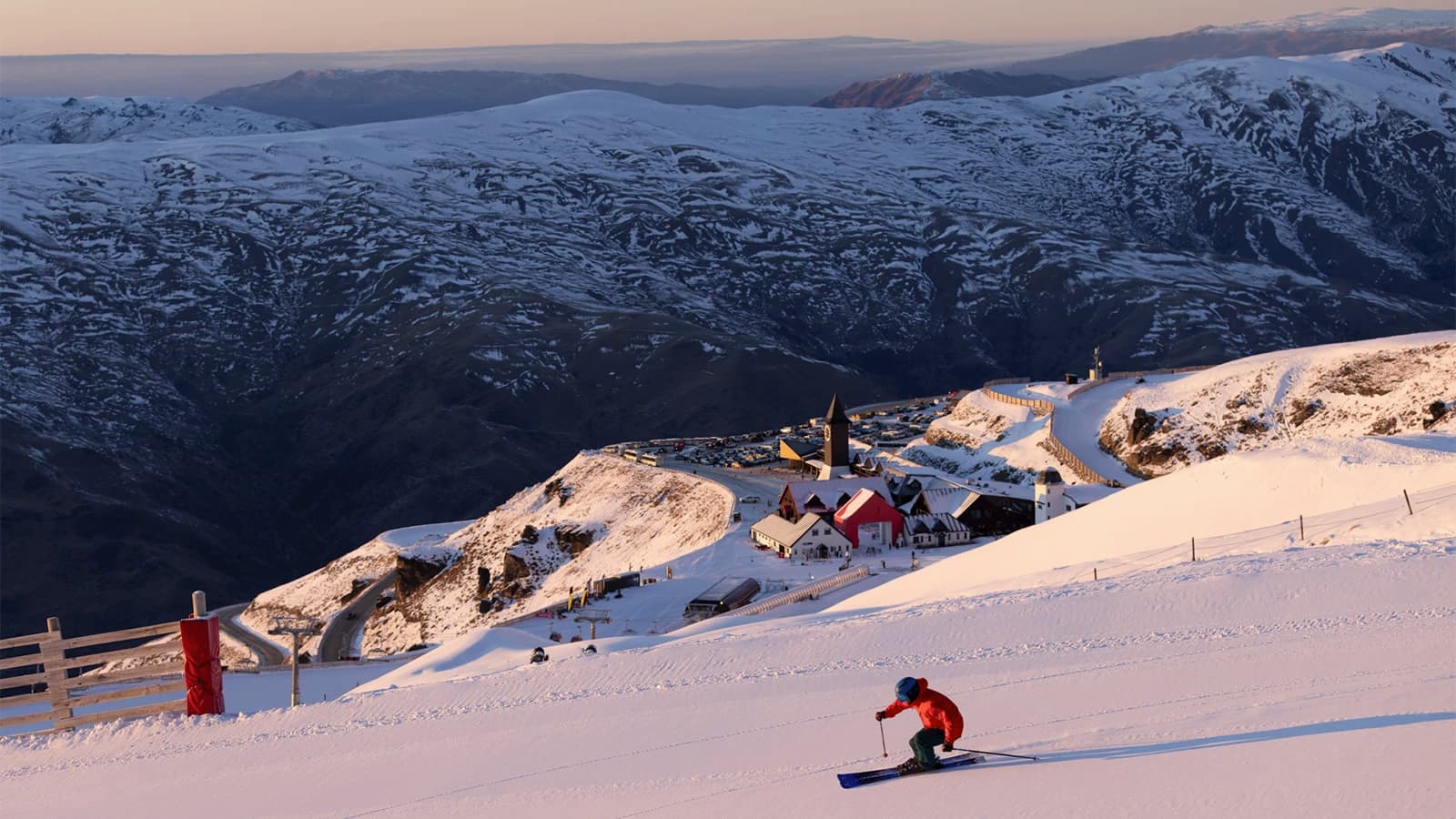
Jon’s Ski Fitness Plan
Jon recommends three simple workout formats depending on where you are and where you’re starting from. Each one focuses on the movements that matter most for skiing: squats, lunges, wall sits, and balance work. Pick the one that suits you and aim to do it two to three times a week. Consistency matters more than intensity.
At home - 3 rounds of:
10 squats
8 forward to reverse lunges each leg
30 second wall sit
20 second balance on each leg
At the gym - 3 rounds of:
8 goblet squats
8 forward to reverse lunges each leg
10 step ups each leg
30 second wall sit
Easier starting point - 2 rounds of:
8 squats
6 lunges each leg
20 second wall sit
15 second balance on each leg
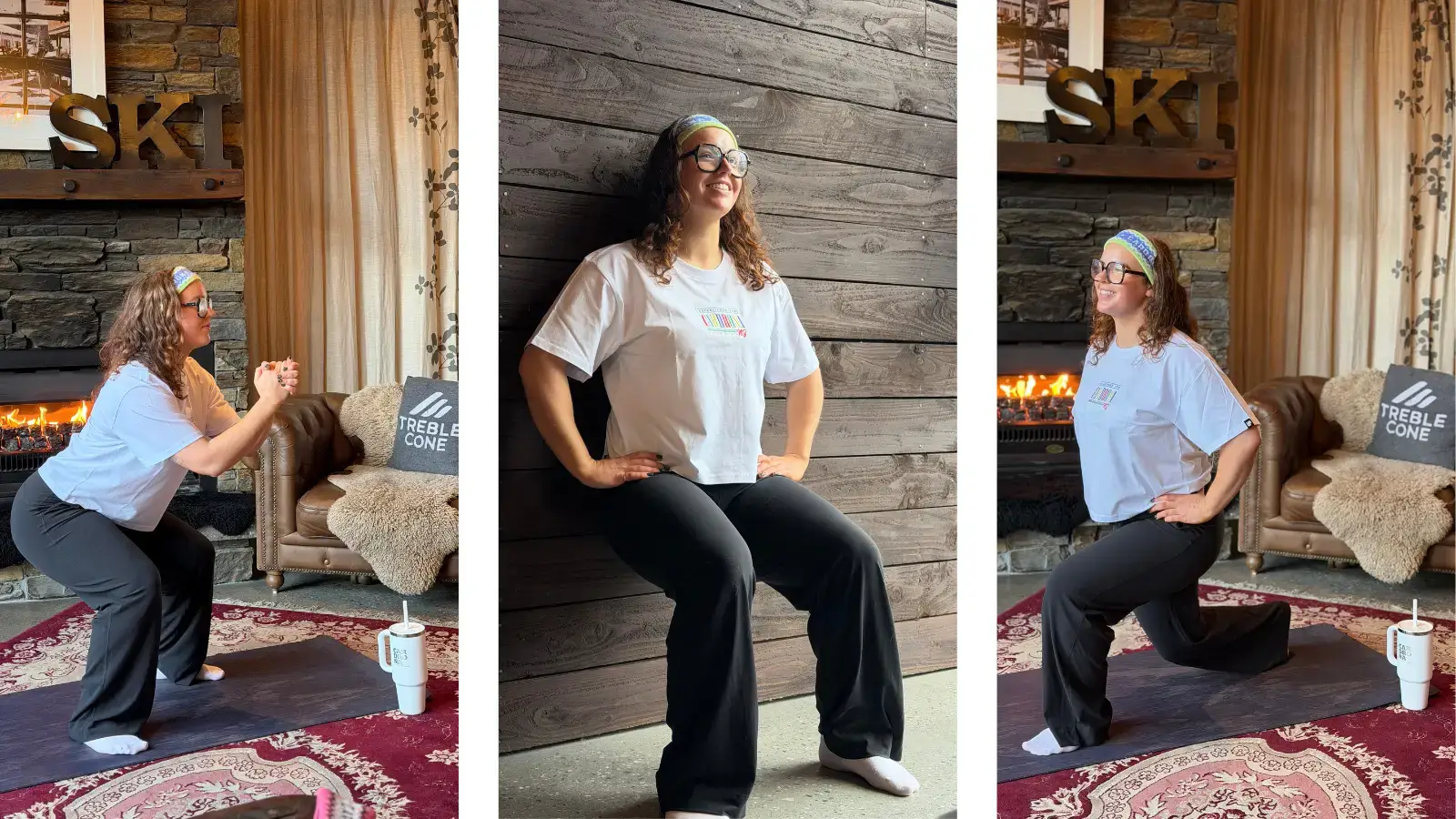
Jon’s favourite exercise right now
One of Jon’s favourite ski prep exercises at the moment is moving from a forward lunge into a reverse lunge on the same leg before changing sides. Step forward into a lunge, return to standing, then take the same leg back into a reverse lunge. That is one rep.
It is a simple way to build strength and balance at the same time, and it feels nicely ski-relevant too. Because skiing is all about moving your balance from foot to foot, exercises like this one directly translate to how your body needs to work on the mountain.
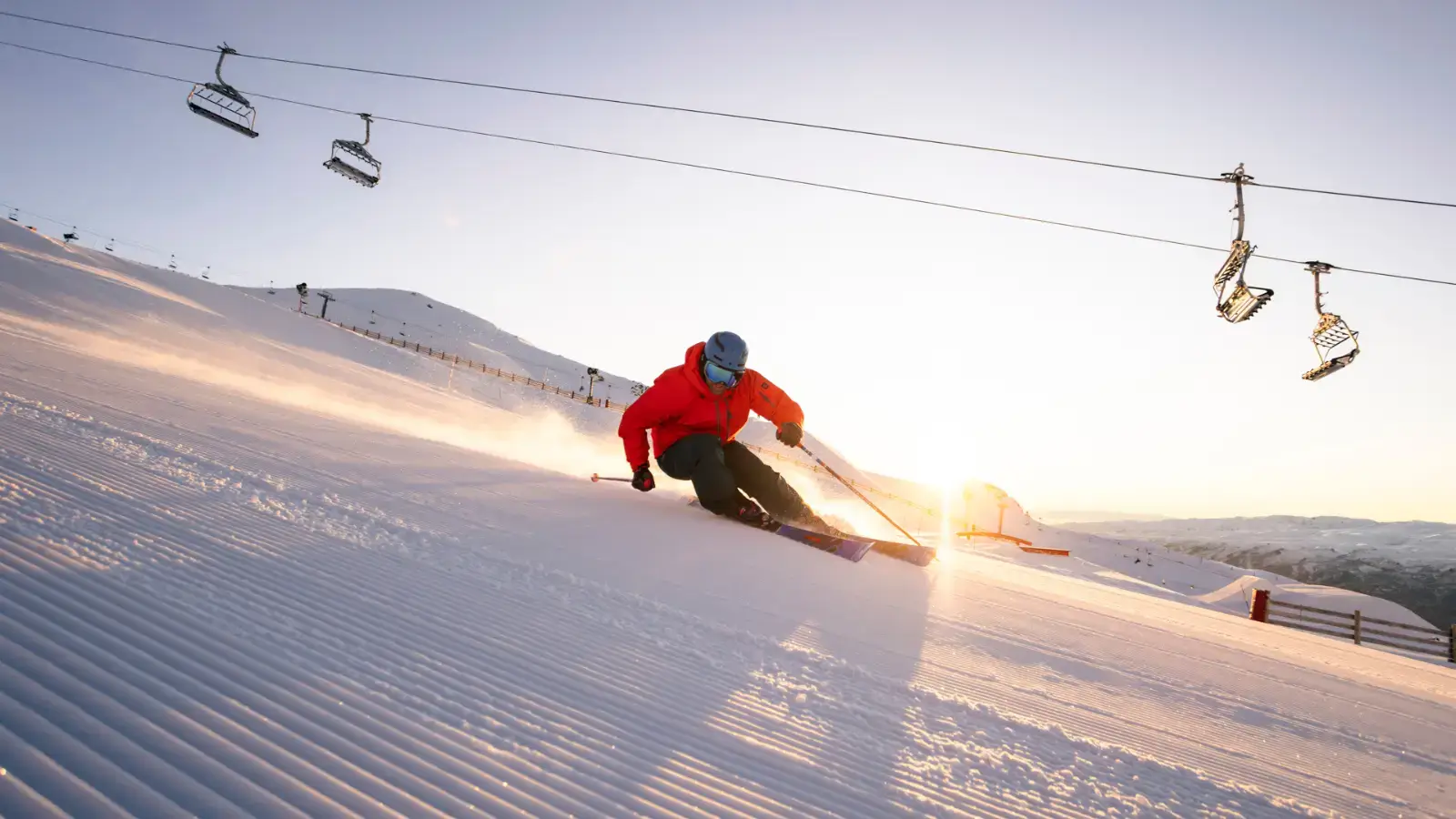
Why single-leg work matters
Whether you're on skis or a board, the mountain demands the same thing from your body - the ability to shift and control your weight, over and over again, run after run. That constant movement between edges and turns is driven by single-leg strength and balance more than most people realise.
That's why lunges, step ups, and balance work are so valuable in your pre-season training. When you train one leg at a time, you build the kind of stability and control that directly translates to turns on snow.
Tips on form from Jon
Getting the technique right matters as much as doing the reps. Here is what Jon recommends for each exercise.
Squats: Stand with your feet about hip width apart, keep pressure through your whole foot, and lower with control.
Forward to reverse lunges: Stay tall through your body, keep the movement smooth, and aim for balance as much as strength.
Wall sits: Keep your back against the wall and lower until you are in a strong chair-like position. If that feels like plenty, start a little higher and build into it.
Balance work: Stand tall, keep a soft bend in your standing leg, and try not to claw the floor with your toes.
Recovery and injury prevention
Getting ski fit isn’t just about training harder. It’s about recovering well too. Focus on foam rolling to reduce muscle tightness, sleep to support recovery and adaptation, hydration to keep your muscles functioning properly, and rest days to avoid overtraining.
It’s also worth remembering that fitness is only one part of injury prevention. Technique matters too. If it’s been a while since you last skied, or you’re still building confidence, a few early-season lessons can make a big difference.
When should you start?
Ideally, start about six weeks before your first ski day. This gives your body enough time to build strength and adapt gradually. For skiers in Australia and New Zealand, that usually means starting in May for a July ski trip.
If you’re short on time, don’t stress. Even two to three weeks of focused training can make a noticeable difference. Just prioritise consistency.
Your legs may hate it. You’ll love it.
There’s a moment on your first run of the season where everything clicks. The air is cold, the snow is fresh, and your legs are already working harder than they have in months.
They burn. They shake. They complain.
And you smile anyway.
Because you’re ready for it this time. You trained for it. You earned it.
And instead of calling it early, you take another run. Then another.
Whatever is bringing you up the mountain this season, the kids, the challenge, or just getting back out there you'll
get more of it with stronger legs.
Related Articles
Mountain Preparation
Ultimate Guide to NZ's Biggest Alpine Playground
Explore Cardrona and Treble Cone, New Zealand’s biggest alpine playground, with more terrain, more variety, and one pass connecting two incredible mountains.
Hints and Tips
Your Guide To Choosing A Lift Pass This Season
Our easy breakdown of lift passes helps you decide which pass is best for you so that you can get the most out of your ski holiday.
Mountain Preparation
Skiing in Queenstown & Wānaka - Best NZ Ski Fields & Resorts
Planning a ski trip to New Zealand? Discover the best Queenstown and Wānaka ski fields, from beginner-friendly slopes to world-class freeride terrain.
Mountain Preparation
Ultimate Guide to NZ's Biggest Alpine Playground
Explore Cardrona and Treble Cone, New Zealand’s biggest alpine playground, with more terrain, more variety, and one pass connecting two incredible mountains.
Hints and Tips
Your Guide To Choosing A Lift Pass This Season
Our easy breakdown of lift passes helps you decide which pass is best for you so that you can get the most out of your ski holiday.
Mountain Preparation
Skiing in Queenstown & Wānaka - Best NZ Ski Fields & Resorts
Planning a ski trip to New Zealand? Discover the best Queenstown and Wānaka ski fields, from beginner-friendly slopes to world-class freeride terrain.